
2019-2025 Archival Note:
This is an archive of my body of work (blog and Not Too Productive podcast) from 2019 to 2025.
As much as I’ve wanted to toss it all in the trash, I believe it matters to show the ideas and experiments that carried me to this moment, and to mark how things, and we, change.
Through my years as The Holistic Time Coach, it became clear that the time I was talking about (a more spacious, humane, cyclical time) wasn’t the same time most people knew. Most of us are still living inside clock time, capitalist time, productivity time.
Now I’m writing about Time Liberation here.
If you see something here that you disagree with, I may… probably… agree with you. That’s part of why it’s now an archive.
Calendly Free Plan: How to set availability that respects your boundaries

When you are starting or growing a service-based business people need to book a session with you.
If you don't have a scheduling system set up, you need one ASAP. (See below to be convinced!)
More importantly than just having an appointment scheduler, knowing how much and when to work is huge!
Your availability is key to sustainably and successfully running and growing your business without burning out.
Imagine how much easier your life would be if you knew exactly how many hours you could take calls and could simply send people a link to book a call that works for them.
That’s why free appointment schedulers, like Calendly, were created.
In this blog, I'm going to step you through how to set your availability that respects your boundaries allowing you to run your business with more ease AND energy.
Why using a free appointment scheduler (Like Calendly) is so amazing?
When you use the Calendly free plan, you no longer have to go back and forth with folks on finding a time that works for both of you. It automatically converts time zones for both of you. Events will automatically be put into your calendar and send reminders to the person who’s signed up.
If you want to take all the decisions and guesswork out of this super-important piece of your business, saving your time and energy for the call itself, set up a free appointment scheduler ASAP.

A Calendly free plan is here to help you simplify and stay true to your boundaries. If you’re still on the fence about Calendly, Calendar.com has this really amazing and comprehensive guide and tutorial.
Once you’ve set up your free plan account (if you didn’t have it already), it’s time to dig into the real topic here. Your availability!
Why knowing your availability is so important

Your availability is a resource to protect and be a good steward of. Knowing when you work and being able to easily communicate your availability is so important. It allows you to…
Show up confident and on top of things with clients, partners, networking calls, and anyone else you might meet up with.
Allows you to join in other events and continuing education programs, knowing you can actually do it without stress and overwhelm.
Know and utilize other days in the week to rest and work on your business.
Show up for the calls you do have more energized and present… usually leading to better transformation, connection, and success for both parties.
Avoid scheduling conflicts.
Determine your pricing for your offers more effectively and realistically.
In summary, it allows you to sustainably and successfully run and grow your business without burning out.
Speaking of, burnout. Check out this major burnout red flag!

Don’t let this be you! (If this is you, no shame. I’ve been there, and I think everyone has at some point. I got you. Keep reading)
What goes into determining your availability?
So many things. Your availability is essentially the same as determining your capacity. If success, sustainability, and enjoying your life are important to you… it’s a non-negotiable to take into account these things below:
How many hours you WANT to work
Your hourly rate (directly calculated from hours you want to work)
Physical health: How much physical energy you typically have and how much energy calls take.
Mental health: How much mental energy you have and how much calls take.
External circumstances like kids, a partner, and other responsibilities.
Time zones for both you and your clientele.
Holidays/special days off/etc.
Once you have all this information laid out for you, you can determine your availability.
I’m a super visual person so before adding anything to Calendly, I like to set it up in my google calendar. I use a holistic and custom-made weekly template to show my availability.
Now set your availability in Calendly!
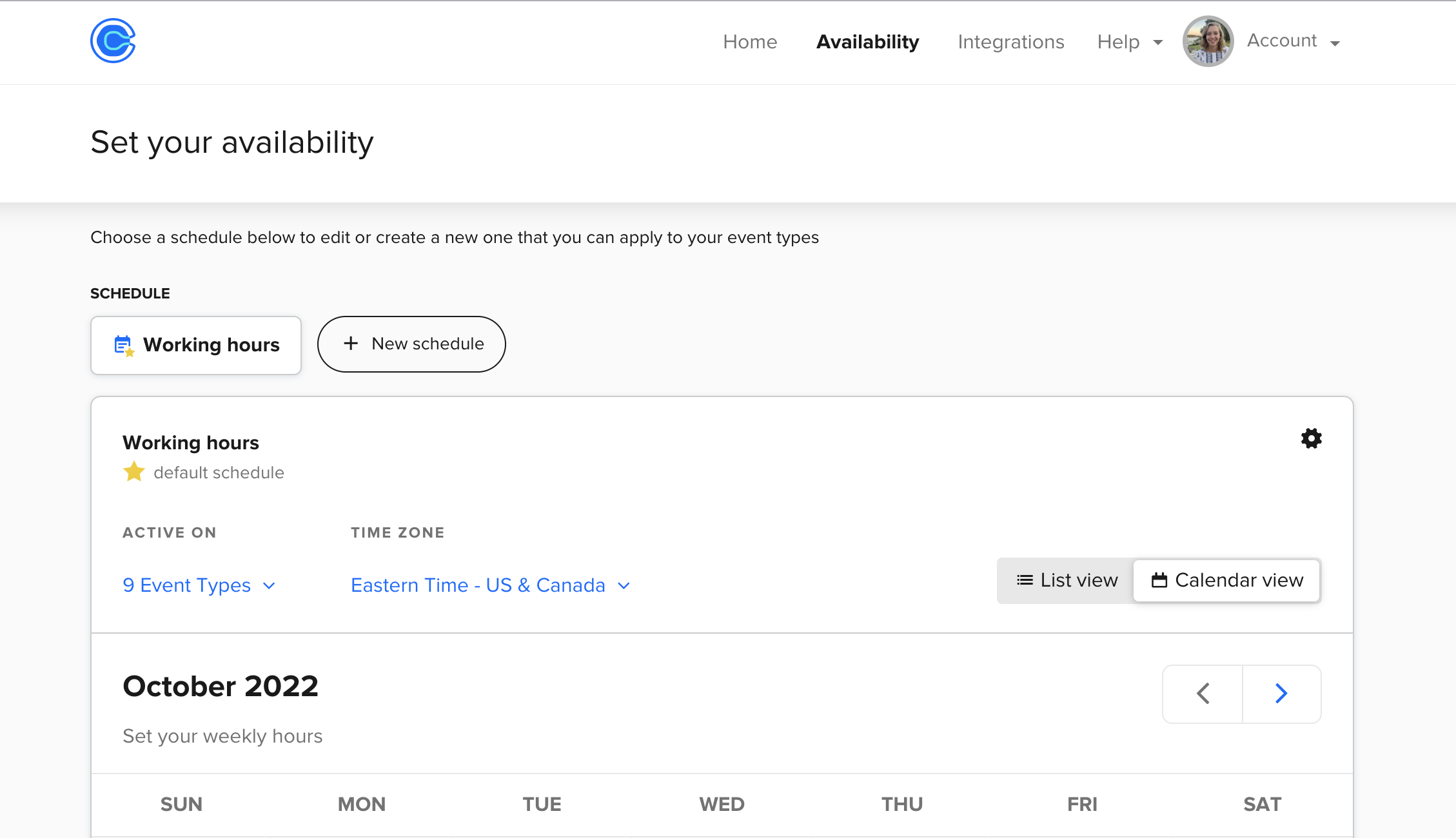
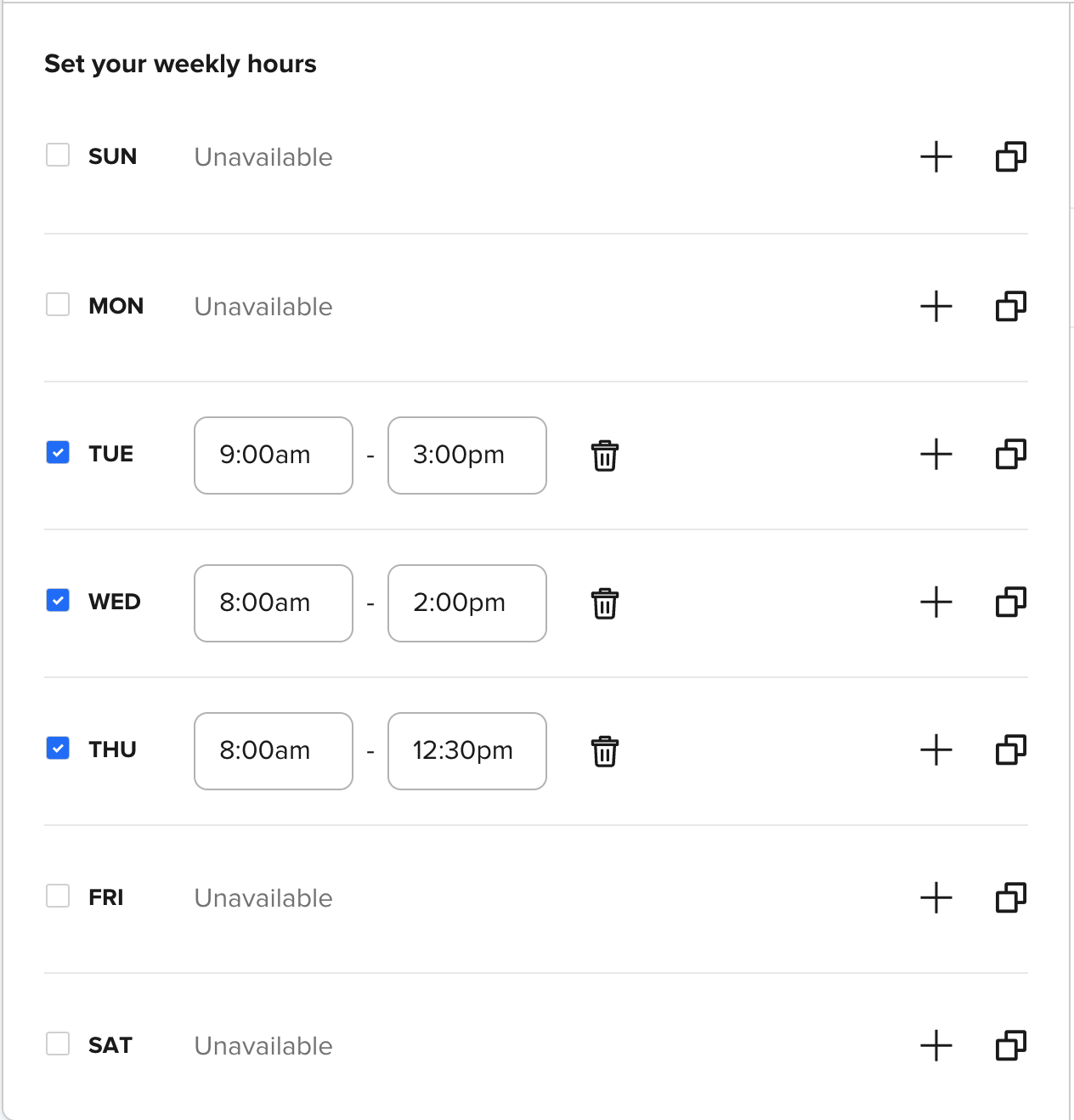
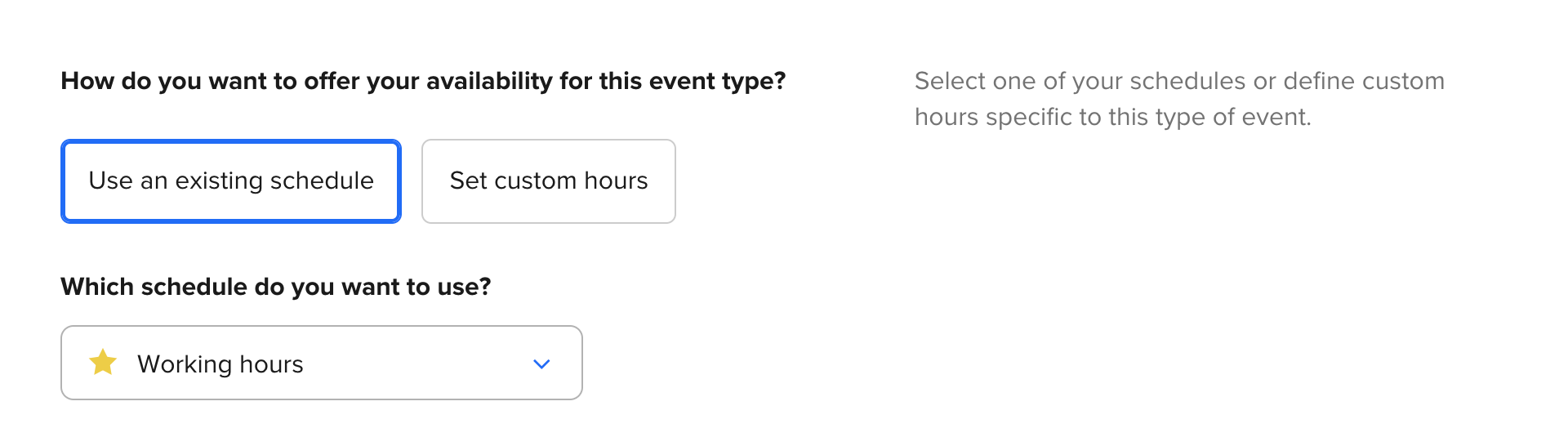
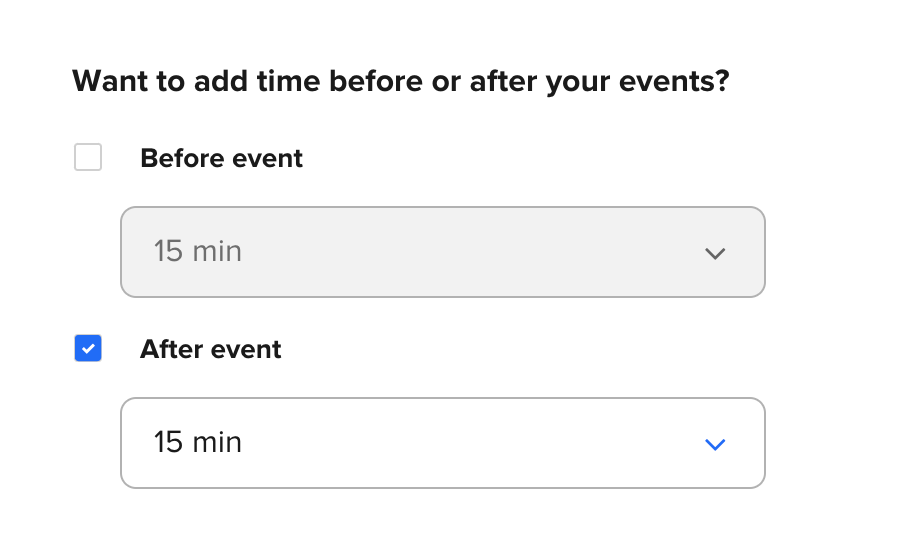
Log in (Sign up if you haven’t used it before)
Toggle over to availability. Make sure you have one availability called “working hours” and all your events are linked to it.
Add in your availability (I like to see it in list view.)
Double-check that your events use your working hours.
BONUS: In your events, you can add buffers to events so you won’t have back-to-back calls to recoup your energy and take a short break.
Don’t forget to keep your availability up to date when circumstances change in your life.
And that’s all you need to do to set up your availability in Calendly!
Did you know I can support you in holistically determining your availability for sustainable success?
Click here to read more about and book a Sustainable Schedule VIP Day.
Partner Works Too Much? Why & What To Do About It

My partner means so much to me. We just celebrated four years (watch this short montage reel I created!) of marriage and it still feels like we’re in the honeymoon phase most days.
I credit much of the strength of our relationship to the healing and growth work I’ve done around time, worth, and success.
Why?
Simply put, time is your life. Time is your presence. And it’s how you show love.
Before I started healing my own misunderstandings around time... I spend most of it working. Not just on my “work-work”. I was always going and doing things.
Without checking everything off my to-do list and successfully achieving all my goals, I didn’t feel deserving of love or partnership.
Where did this leave me? Us?
While I cherished my relationship, it was suffering because of my inability to be with him. I rarely sat still long enough to form a real and deep connection with myself, let alone my partner.
Cue all the frustration, resentment, and guilt.
I created this blog for those of us craving more presence with our partners, our kids, our family members, or even ourselves. Keep reading for an inside look at making time for loved ones, because it is possible to have time for everything that’s important to you. And holistic time management can help get you there.
How do you know if you or your partner works too much?
These are the signs that I personally experience, and my clients’ experience, when we’re not making time for our loved ones.
Frustration, resentment, and/or guilt towards self or partner.
Feeling physically, mentally, or emotionally disconnected from your partner.
Never having time to cook and enjoy meals together.
Feeling unbalanced in domestic duties.
Struggling to not talk about work when you aren’t working.
Any successes you do have feel empty.
Think of something else I haven’t included in the list above? Feel free to share your unique experience in the comments below - who knows, others might be in the same spot.
Why is it so difficult to make time for our partners? We love them!
If your partner works too much or you find it difficult to make time for your partner... You are not alone.
As a time coach, an extremely common goal of my clients is to have more time for their loved ones. They want to know, “why is it so hard to make time for the people I love?”
Often it’s not about a lack of love. It’s because we’ve been taught to place more value on work, money (especially if we’re in survival mode), and success.
Many people label time with loved ones as rest, time off, and/or self-care. As we know, those are some of the most challenging things to actually have time for. We have to flip this inherent prioritization in order to reclaim our time.
If you’re a business owner, this feeling can compound even more. Our businesses feel like our babies in a way, taking time away from them feels impossible. Businesses that are passion-led and mission-based are deeply connected to our purpose.
Want to read more about the truth about the difficulty of taking time off? Click here.

What to do if you or your partner works too much?
The answer to this is a complex one. Because you and your relationships are unique, giving tips and advice doesn’t feel all that useful here.
The best thing I can offer are these three coaching questions:
Is making time for your loved one important to you?
If so, why? What will happen in your life if you make more time for them?
What is ONE small thing you can implement today to be more present with them?
Some steps could look like:
Pause and take a deep breath (or three).
Setting clear expectations with your partner about how you spend your days.
Discover and focus on doing the things you both love to do together.
Heal any limiting beliefs around what’s preventing you from making time for them and being present.
Create time management systems to make the time actually happen. For example, a shared calendar to more openly communicate your schedules. In my Sustainable Schedule VIP Day, I’ve worked with clients to create shared calendars with their partners, for their kids, and a co-parenting schedule. Learn more here.
Adopt a practice mindset where it’s okay to mess up and fail sometimes.
Recognizing the little moments throughout the day.
Notice a trend in all these steps above? They’re all related to time management.
Why time management is so important for good relationships
Simply put, time is your life. Time is your presence. And it’s how you show love.
It’s also how you make money, pay your bills, and find fulfillment in your life.
Making time for everything that’s important and meaningful to you is no doubt a juggling act. I’ll be the first to say it is a constant work in progress. (Yes, even for me… a time coach).

Time management is the most important thing you can focus on because when you effectively accomplish everything you need to, tasks don’t bleed over into your time with your loved ones.
You can relax and enjoy the company of your people without feeling guilty (HUGE!)
When you prioritize and dedicate time and energy to your relationship, it will flourish.
If you are able to tap into the present moment when you’re with your partner, it’ll be a lot easier to feel connected and loved.
The opposite is also true. When you don’t spend time with the people that mean the most to you, the relationship will suffer in some way. Learn more about the benefits of rethinking how you manage your time.
Holistic Time Coaching is your best bet for making time for loved ones
Traditional time management focuses on helping you be your most productive self at work, sometimes at home. When you set goals, create a schedule, or write a to-do list… it’s rarely encouraged or taught to include things like rest, time off, and/or self-care.
If we equate our relationships with those things, it makes complete sense to me that they don’t happen as often as we’d like them to.
Holistic time management understands the entire scope of your life and what’s most important to you, like your relationships. Managing your time with a holistic approach will allow you to be a whole human being.
Learn more about why holistic time management works so well here.
Want your evenings back to spend with your partner (not thinking about work?)
Learn more about 1:1 holistic time coaching.
3 Reasons why I no longer create quarter plans like I used to

How many times have you had so much you wanted to do, felt like you had to do it all immediately, and so just added it all to your plan?
Or have you ever made a plan, only to have life turn it upside down, leaving you lost and confused?
Yep, me too!
That’s one of the reasons I fell in love with quarterly planning.
I was tired of spinning my wheels trying to make progress towards my goals that seemed just out of reach.
If only I could find a way to focus, follow through, and control all of life’s curveballs.
That way was quarterly planning for me, circa 2018.
Now 4 years later, it’s time to share why I’m not planning in the same way anymore. Keep reading to find out!
What is quarterly planning?
If you aren’t familiar with quarterly planning, that’s ok! Quarterly planning simply asks you to think about and plan three months at a time, rather than a whole year or more.

When you break your year down into four pieces, it’s a lot easier to prioritize projects allowing you to stay flexible, focused, and more easily make progress.
What role did a quarterly plan play in my success?
When I first read 12 Week Year by Brian Moran in 2017, I was blown away.
At that time in my life, I was working an engineering job full time, teaching yoga part-time, planning my own wedding, and starting my own online yoga business. Just writing that out exhausts me.
I quite frankly had too much I wanted to do, and I felt like I had to do it all yesterday.
Quarterly planning allowed me to list out everything I wanted to do, and then attempt to prioritize.
Don’t be fooled, I continued to start every quarter with more than the recommended amount of priorities.
While I continued to do more than I realistically could, I was making progress faster because I was saying no to some things.

Looking back, quarterly planning helped me start to learn how to focus my time on the things that would actually move the needle.
Instead of buying course after course, I filled my time with what would actually grow my business: consult calls, coaching sessions, and networking.
Quarter planning was a major tool that created the momentum I needed to quit my 9-5, become a digital nomad, devote time to my relationships and my personal growth, and just live my life!
Then, once I started The Holistic time Coach, I was also able to put my own spin on quarterly planning and teach it to others.
Long story short: Quarterly planning, more specifically the often impossible skill of prioritizing played a major role in my success.
However, now 4 years after implementing quarterly planning in my life and business, I don’t need it in the same ways.
Whether you’re currently where I used to be and really need to prioritize better or you got that down and you’re trying to figure out what’s next, here are some of my thoughts:
Why I don’t create quarter plans like I used to
I deeply know my capacity, limits, and boundaries now
As I mentioned above, quarterly planning helped me put less on my plate than I naturally would have.
I now know tangibly how much I can put on my plate before I disturb my physical, mental, emotional, and/or spiritual health (my definition of capacity).
I don’t limit myself to 3 priorities, and I don’t need 3 priorities every quarter. I tune into myself and create a quarter plan that honors me instead of following someone else’s guidelines.
I also now generally put wayyy less on my plate. I look at projects and goals with a more realistic lens. I know what to say no to and have the skills to do that. And that’s helped me be more effective and live more authentically.
I trust myself more to (actually) follow my plans

I used to make a quarter plan that was a super detailed broken down action plan every month and every week. I also had a tracker to score and grade myself. (BLEGH!)
What ended up happening? I would never actually follow to detailed plans I would spend days creating, and never actually tracked my actions. It was too much for someone with already too much on their plate.
Looking back, I realize I didn’t really trust myself. I thought I had to do #allthethings in order to achieve my goals, so I could finally be happy. And more so, deeper down I really didn’t believe I could follow through, and so I proved myself right every quarter.
Until something clicked (more self-trust was the answer), I continued to make strict, rigid, detailed plans set up to fail me.
I can now trust that when I say I’ll do something, I’ll actually do it. I keep my word to myself, and follow through with the things that are deeply meaningful to me.
This has made my quarter plans more relaxed, open, flow-ey, and spacious helping me feel that through the day-to-day.
I simplified my life
I no longer have a job to balance while building my business. I’m able to focus on just me and my business… because I focused, made the most of my time, and took action.
I simplified my life in so many ways. I no longer have all these habits and external goals I’m constantly striving towards. Deep down in my heart, I feel more complete and content than I ever have.
Don’t get me wrong, I’m still constantly growing and healing. But there is a difference between that and setting a ton of goals and believing I’ll be happier once I achieve all of them.
I know it sounds cheesy, but I genuinely go with the flow and am open to whatever opportunities the universe presents to me. And lucky for me, I have the space and time to listen! My quarterly planning reflect these beliefs.
Where to go from here?
If you’re reading this, you might be thinking to yourself, “now what?” The beautiful thing about that is you get to decide!
If you have a ton on your plate, and you don’t want to feel stressed and overwhelmed all the time anymore, quarterly planning can really help you.
I invite you to check out my holistic quarterly planning worksheet.
If figuring out what a life of knowing yourself better, trusting yourself more, and enjoying a slow, peaceful yet ambitious life is important to you, learn more about working with me one-on-one.
I’d love to hear more about what you’re going through and if I can support you in discovering a new way of moving through the world.
Don't know how to slow down and enjoy life more? Here's how she did it.

At a point in your life where you’re trying to slow down and enjoy life more yet don’t exactly know where to go from here?
You know a lot of the systems you’ve been using and the old ways of thinking about time and productivity aren’t serving you anymore and you’re not sure what else things could look like?
You’re not alone.
The pandemic has made quite a lot of people
Rethink what they’re doing with their lives
How they spend their time, and
Finally, realize they have needs and desires…like slowing down… they need to listen to.
Learn about how Kasia slowed down and the massive impact it had on her business, relationships, and health.
Tell us who you are and what you do.
Hi! I’m Kasia, a specialist in the field of menstrual cycle disorders, and a graduate of pharmacy and clinical nutritionist at Wiecej Niz Hormony.
Why did you want to work with me?
I was at a point in my life where I was slowing down, and I knew a lot of things I used to do didn’t work for me.
My systems didn’t work because I was trying to fit myself into them, instead of the opposite.
I didn’t know how to create my own flexible structure.
What doubts did you have before working together?
I was trying to figure out if I really needed this or if it was just a whim.
I was worried that I would place all of my future hopes in it, and I didn’t want to do that to myself again.
Of course, financially I wasn’t sure if it was the best time or if it wasn’t worth it…. BUT it was one of the best decisions of my life.
What has been your favorite part so far?
Every part!
I am in the center, and I am able to make decisions for myself. There are no shoulds and pressure.
The space you created for me is so calming and loving.
You ask me so many questions… permission to tell you something, what our next steps are.
I feel taken care of!
What would you say was the biggest thing that changed for you?
I let go of all the shoulds and musts and prioritize myself. Even though it sounds so simple and everyone talks about that, I didn’t do it because I thought there are still things I should do, rules to follow in order to be successful in my life and business. I now put myself first when it comes to my schedule and to-do lists.
My business grew and I earn more money.
I finally know so much more about myself and my needs.
I decluttered my life from so many things that don’t serve me.
I’m so much more in tune with myself, respect myself more, my time more.
My google calendar doesn’t scare me anymore, finally!
…and so much more. I could talk about this forever.
Who would you recommend me to work with?
People who are struggling with finding the perfect time management system.
People who want to live more in tune with themselves, want to discover their values, and want to live a peaceful joyful life.
Any last thoughts?
It was one of the best investments of my life working with you.
It completely transformed my life in a way I couldn’t even believe was possible.
Want earning more money while feeling in tune with yourself to be way less stressful and painful? Apply to work with me here.
5 Critical steps to take when shiny object syndrome is slowing your business growth

Have you ever…
Threw money at a problem only to realize later it didn’t solve your issue?
Found yourself paying for and or taking course after course and not implementing most of what you learned?
Had a million and four ideas for new products or services, and you jump from one idea to the next without really seeing them through?
Answered yes to any of these? You might be suffering from shiny object syndrome.
If business owners aren’t careful, they can easily find themselves trapped by something termed shiny object syndrome.
Find yourself in this boat? Don’t fret! Keep reading to find out how to get your focus back.
Written by: Leslie Taylor & Associates
One of the biggest challenges I have faced in my business and watched my clients face is trying to figure out where to focus limited resources—time and money.
Even though I help entrepreneurs do this by providing them with greater insight into their businesses, the decisions are generally not easy, there are usually additional unknowns, and there is always some level of risk.
If you have been in business for any length of time, you likely understand by now that the name of the game is to figure things out as quickly as possible before you run out of money.

Figuring “it” out refers to understanding the right combination of things that will allow us to see cash flowing into our businesses and ultimately into our pockets. While we want to figure “it” out as soon as possible, sustainable business growth takes time. So, on the one hand, while we can and should learn from others, there are some things we must learn and validate on our own.
Ultimately, no matter how smart the owner, every business has gaps, inefficiencies, and things that no one on the team is good at doing.
Fortunately, there are a million and one options for fixing all the things.
Unfortunately, there are a million and one options for fixing all the things.
What is shiny object syndrome?
Shiny object syndrome is a type of distraction in which an individual is constantly chasing new, different, or the shiniest and most exciting things, and never making real progress.
Shiny object syndrome can distract to the point that a business ultimately fails because it never properly identifies and addresses the critical issues.
As an entrepreneur, you might have suffered from shiny object syndrome if:
You purchased a solution to a problem only to realize later that that particular solution didn’t solve your most pressing issue
You find yourself paying for and or taking course after course or working with coach after coach and not implementing most of what you learned
You have a million and four ideas for new products or services, and you jump from one idea to the next and on to the next…and the next never really seeing them through
If this is you, or has been you at some point in time, here are a few steps you can take.
What to do if you’re experiencing shiny object syndrome?
1) Ask WHY?
Do you have a sales problem, an expense problem, a profitability problem, or an operations problem?
While the cause of the issue could be due to a variety of things, most issues fall within one of these four areas. It is worth noting that it is possible to have some combination of these four.
Often by getting to the core of the problem, it is easier to determine the next action.
A sales problem looks like your business doesn’t have a steady and semi-controllable stream of clients and customers paying for your goods and services. It could be that sales activity is low, or that it fluctuates greatly. Any solutions forward must directly address the sales issue, if not you are wasting time and money.
An expense problem means a business hasn’t assessed its spending for money leaks. The solution forward must help the business look for and correct the money leaks before they run out of resources.
A profitability problem means the business is making sales consistently, but the money in the bank account doesn’t show it. The business has low or no cash even though the money keeps flowing in and clients/ customers are buying. The solution forward should first help identify the source of the profitability problem (pricing, excessive discounting, etc.), then help you address the issue.
An operations problem means that something in the way the business is doing business is keeping it from reaching goals. Maybe one of your employees is overloaded (maybe that is you, the owner), perhaps your customer experience is lacking in some way, or maybe your product has quality issues, or possibly your website is slow and potential clients get frustrated and leave. Again, the solution forward must address the operations issue directly.

2) Set goals for your business
Create goals for your business for the year that include a financial roadmap (budget) and look at your goals daily or weekly.
To stay focused, I keep a copy of my vision posted in my office and try to look at my goals every Monday morning before starting the week.
3) Be accountable to your goals
When considering any solution to grow or improve your business hold it up against your goals.
Possibly, more importantly, hold it up against your budget. How will this be paid for? Cash, loan, credit card, owner financed from personal funds?
4) Plan New Ventures
Vet new product and service ideas through a business plan format.
No, you may not need to create a full-blown business plan, but consider all the sections of a business plan and take the new idea through each section— goals, target market, the problem you are solving, marketing plans, and financial projections. Especially financial projections because you are in business to do what??? Make MONEY!
5) Give it a chance
Give new product or service ideas a real chance before you consider moving on to the next thing.
Once launched, give it at least 6 months and during that time gather feedback and make adjustments as needed based on that feedback.
Still unsure of how to heal shiny object syndrome?
Even with all these techniques, staying focused is still not an easy task for busy entrepreneurs. There are simply too many things calling for our attention.
When I am most needing to stay focused or accountable, I have found the use of an accountability partner or group to be helpful so that I could be more focused on those really big things that will move my business significantly.
If you need help determining whether you have a revenue, expense, profitability, or operations problem, or you simply need help tracking and understanding what is going on in your business, Leslie Taylor can help. As a business solutions expert, she has helped dozens of businesses untangle complex issues and clarify a path to greater profitability. Schedule a Discovery Session with her now.
Want to learn more profitable strategies for your business? Check out Leslie’s free guide 5 Things You Must Do If you Want To Increase Your Profits.

About the contributor:
Leslie Taylor is the Chief Profitability Strategist of Leslie Taylor & Associates Business Solutions where she helps small businesses maximize their potential of profitability.
Search for something!